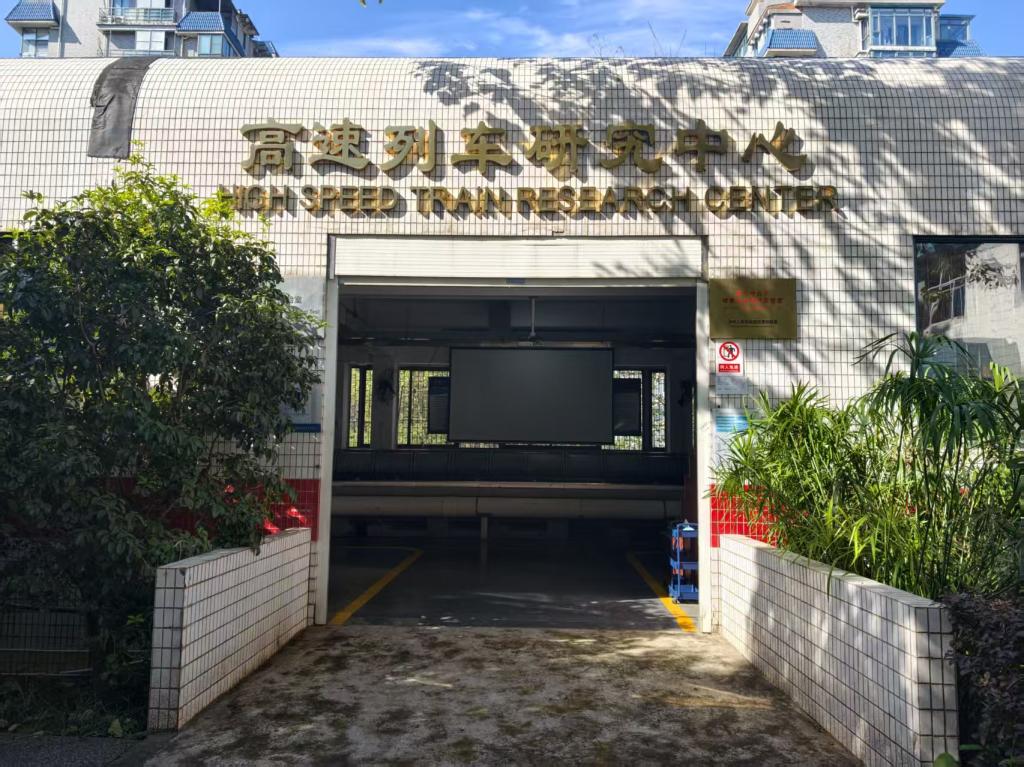
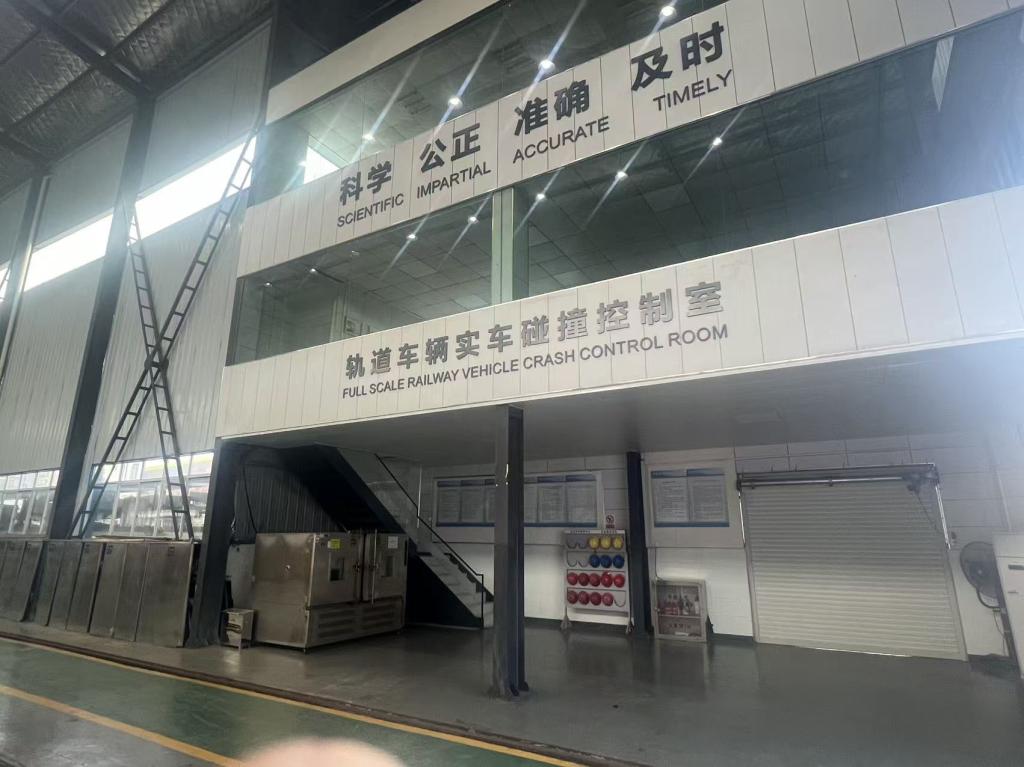
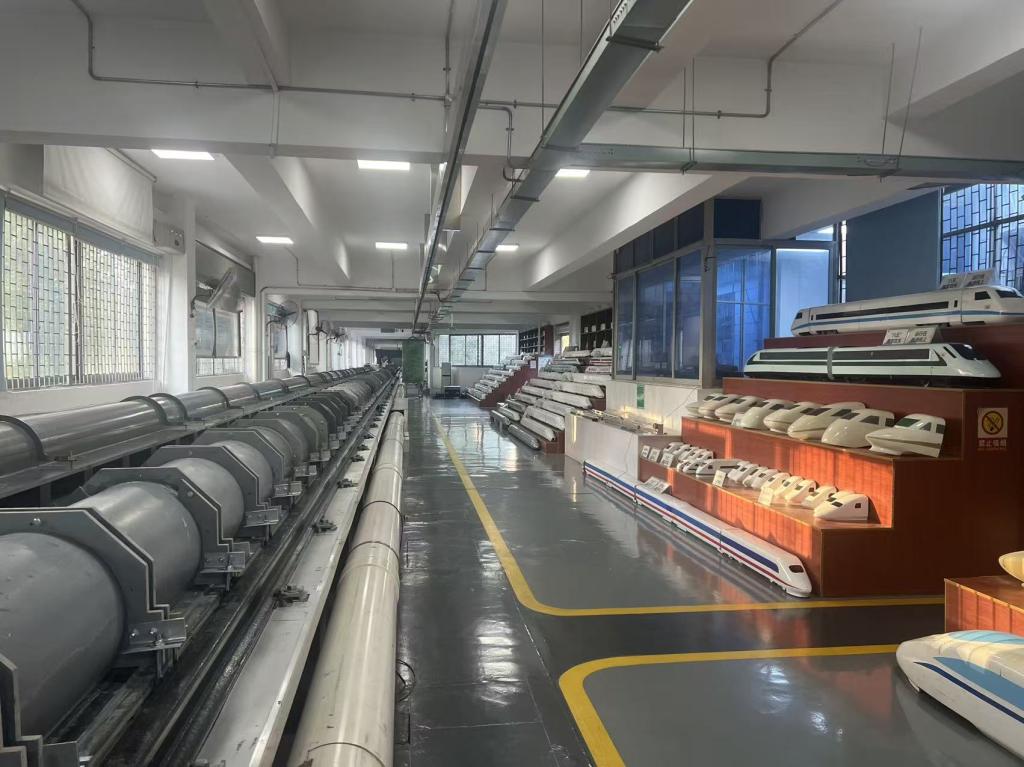
The Center pioneered two research fields in China: rail transit aerodynamics and train crash dynamics, and has expanded into three additional areas: new propulsion technologies, pathogen transmission control in train cabins, and low-altitude transportation. It has achieved multiple world-first breakthroughs and was approved as a National Innovation Team, serving as a key scientific and technological force supporting China’s global leadership in high-speed rail and contributing to civil-military integration.
The Center accomplished the aerodynamicdesignfor China’s first high-speed train and all subsequent streamlined train models, as well as the crashworthiness design for the first energy-absorbing impact-resistant train. It developed:
The world’s only wind monitoring and warning system for the Qinghai-Tibet Railway;
The first globally a 500 km/h high-speed wheel-rail train and a 600–800 km/h maglev train aerodynamic dynamic simulation test system;
The first internationally a full-scale rail vehicle crash test/instantaneous force measurement system.
These systems hold global certifications and international recognition. The research outcomes have been fully applied to:
High-speed railways (e.g., Beijing-Shanghai, Lanzhou-Xinjiang);
All Fuxing-series high-speed trains;
Plateau and cold-region railways (e.g., Xinjiang, Tibet);
International projects (e.g., Indonesia’s Jakarta–Bandung HSR);
Urban rail trains exported to the U.S. and other countries.
Awards include:
16 National Science and Technology Awards (including 4 National Special Prizes for Science and Technology Progress);
10 National Teaching Achievement Awards;
2 China Gold Patent Awards;
Inaugural National Advanced Professional Talent Collective;
National Worker Pioneer Award;
National Model Party Building Branch;
National Innovation Excellence Team Award;
National Outstanding Engineer Team Award;
National Railway "Locomotive Award"