Introduction
The Institute of Transport Geography and Economics at Central South University (CSU-ITGE) is established leveraging the strengths of the University's "Double First-Class" discipline in Transportation Engineering and its prominent position in the railway and transit industry. Grounded in the interdisciplinary field integrating transport geography and economics, the Institute adopts multi-scale, multi-dimensional, and cross-disciplinary research perspectives. It focuses on the dynamic interactions between transport infrastructure and regional development, dedicated to exploring the spatial layout and operational efficiency of transport networks, as well as their strategic impacts on economic and social development. Through theoretical advancement and empirical analysis, the Institute aims to promote the synergistic development of transport geography and regional economics, thereby supporting the implementation of national major strategies, fostering balanced regional development, and enhancing social equity. Institute members have led over 20 national-level projects, including those funded by the National Natural Science Foundation of China, and have published more than 200 papers in prestigious international journals such asScience, Nature Physics, Transportation Research Part B, and Journal of Transport Geography.
Team
Hu Xinlei, Director of the Institute, Associate Professor / Master's Supervisor, Director of the College Training Center / Deputy Director of the Department of Transportation Engineering. Youth Expert of the Railway Expert Group for Major and Key S&T Special Projects of the Ministry of Transport, Young Editorial Board Member of the Journal of Railway Science and Engineering.
Li Chuanyao, Core Team Member, Professor / Doctoral Supervisor, Deputy Director of the Department of Transportation Engineering, Editorial Board Member of the Journal of Transport Geography.
Wang Pu, Core Team Member, Professor / Doctoral Supervisor, Director of the Hunan Provincial Key Laboratory of Rail Transit Big Data, Hunan Provincial Distinguished Young Scholar, Associate Editor of IEEE Transactions on Intelligent Transportation Systems (IEEE TITS).
Deng Lianbo, Core Team Member, Professor / Doctoral Supervisor, Director of the Rail Transit Operation Research Institute, Council Member of the Chinese Society of Management Science and Engineering, Council Member of the Higher Education Management Branch of the Chinese Society of Optimization, Overall Planning and Economic Mathematics.
Zhou Wenliang, Core Team Member, Professor / Doctoral Supervisor, Director of the Department of Transportation Engineering, Hunan Provincial Young Backbone Teacher.
Yin Yonghao, Core Team Member, Associate Professor / Master's Supervisor, Young Editorial Board Member of Urban Rail Transit.

Research area
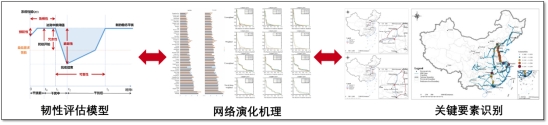
1.Resilience Assessment and Enhancement of Ultra-Large-Scale High-Speed Railway Service Networks: Developed vulnerability and resilience assessment models for ultra-large-scale high-speed railway service networks. Proposed resilience enhancement technologies focusing on network planning, transport organization, and emergency scheduling. Revealed the risk evolution mechanisms within large-scale high-speed railway service networks.
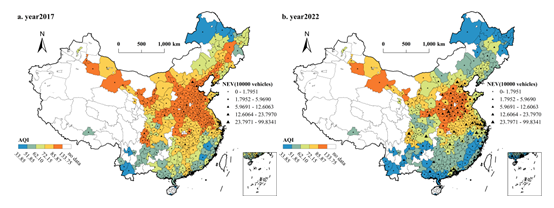
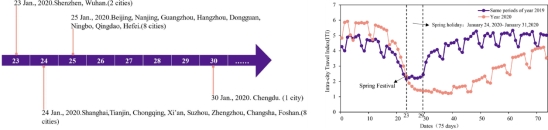
2.Urban Transport and Sustainable Development: Research findings indicate that from 2017 to 2022, with the promotion of new energy vehicles (NEVs) in various cities, the average Air Quality Index (AQI) showed a declining trend, with NEVs exerting a significant negative effect on AQI. Studies also found that remote work reduced intra-city travel intensity by 65% and improved AQI by 26.3%, with concentrations of five major pollutants decreasing significantly. This research points out important directions for future urban sustainable development strategies.
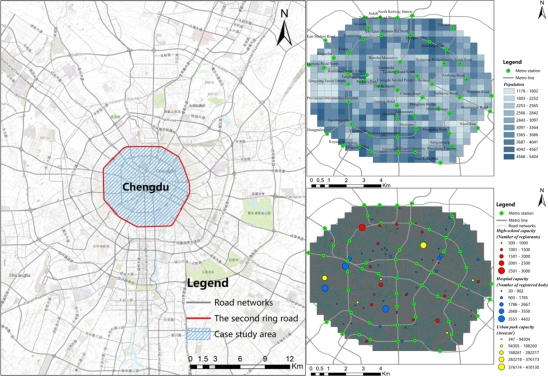
3.Spatial Accessibility: Based on accessibility development strategies, proposed an evaluation method for the comprehensive accessibility and equity of multiple facilities in urban core areas. This method can effectively identify shortcomings in public service provision and enhance the rationalization of resource allocation. It provides planning recommendations for non-motorized transport infrastructure development and service supply adjustments.