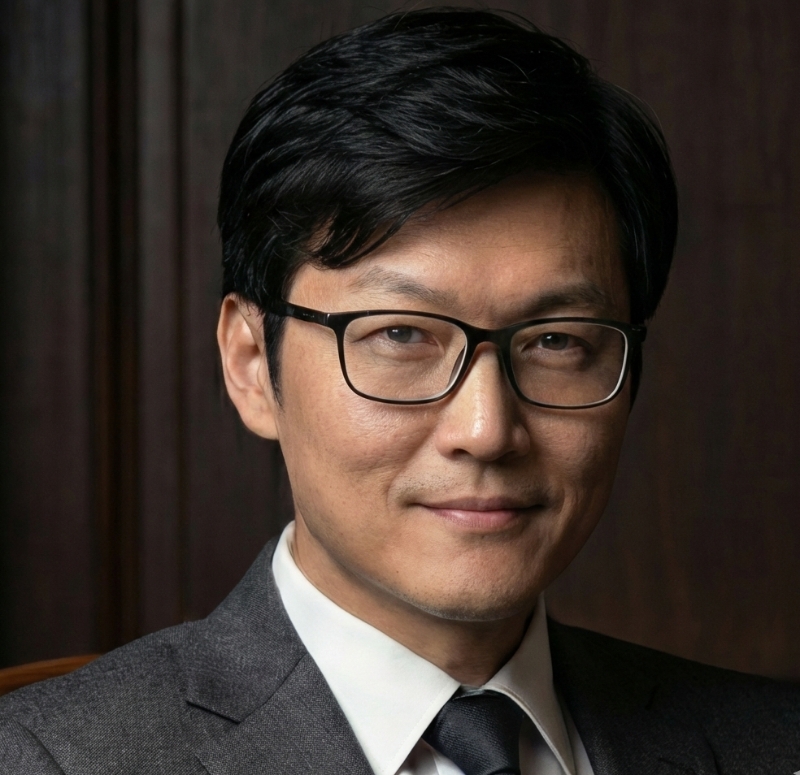
Recently, Professor Xiong Xiaohui from the School of Traffic and Transportation Engineering at Central South University, along with her collaborators, published a research paper titled “Mitigation mechanism of porous media hood for the sonic boom emitted from maglev tunnel portals.” This research achievement was published as an editor’s recommended article in the journal Physics of Fluids by the American Institute of Physics (AIP) Publishing and was featured in an interview article by AIP’s Scilight.
Scilight was launched in June 2017 as an online weekly published by AIP Publishing. It is dedicated to selecting the latest and most representative articles in the field of physics published by AIP, briefly summarizing their research findings, and highlighting their innovation and breakthroughs in the field. Each year, Scilight selects only over 300 of the most noteworthy research achievements in physics from more than 30 journals under AIP for coverage.
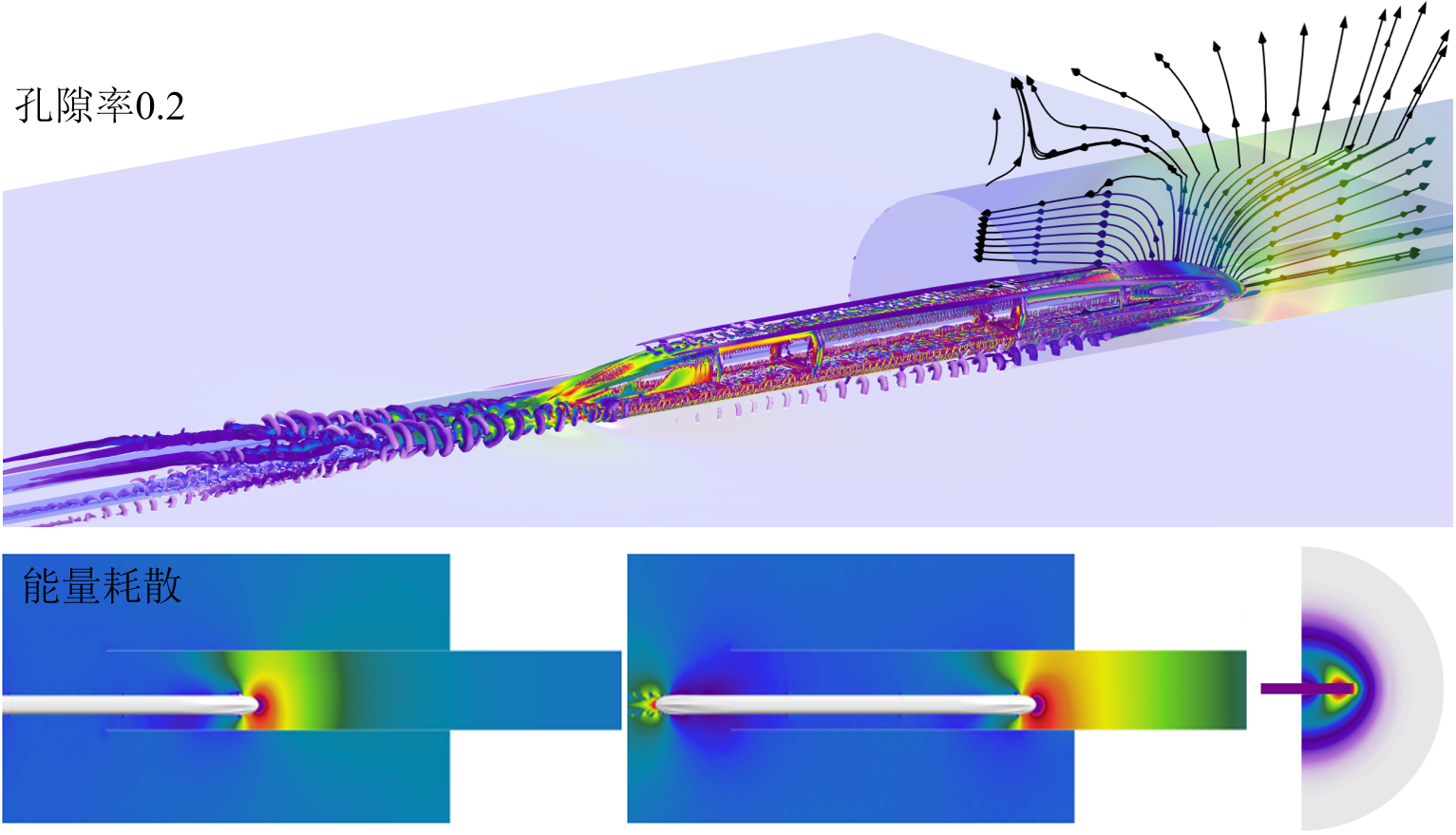
With the official release of the 600 km/h high-speed maglev system, the aerodynamic effects caused by high-speed maglev trains passing through tunnels have attracted widespread attention. The initial wavefront driven by a maglev train entering a tunnel merges into a weak shock wave under nonlinear effects and radiates into the surrounding environment in the form of low-frequency pulse waves at the tunnel exit. This micro-pressure wave can cause a sonic boom phenomenon and induce structural resonance in surrounding buildings, posing a threat to humans, animals, and building structures near tunnel portals. To address the challenge of sonic booms at high-speed maglev tunnel portals, the research team introduced porous media materials into this research field, innovatively proposing a porous media hood to weaken the intensity of the initial wavefront and gradually release the energy of the micro-pressure wave. The research team developed a research methodology based on maglev moving model experiments and porous media numerical models, revealing the mechanism of the porous media hood’s effect on micro-pressure waves, the spatiotemporal evolution of the flow field, and the aerodynamic load on the train body.
Scilight interviewed Professor Xiong Xiaohui and reported on the research findings under the title “Maglev tunnel hoods can prevent speed-driven sonic booms.” The report noted, “The porous media hood can slow down the gradient of the entrance initial wavefront and reduce the acoustic level of the micro-pressure wave by enhancing the radiation of the exit wavefront. This hood can also mitigate the amplitude and rate of change of the train’s aerodynamic load, helping to improve passenger comfort and suppress train tail swing.” Professor Xiong Xiaohui mentioned in the interview, “This work can be used to guide the design of high-speed maglev tunnel hoods, thereby improving passenger comfort, enhancing vehicle dynamic performance, and reducing noise levels around tunnel portals.” When the porous media hood faces complex climatic conditions, the porous structure possesses self-cleaning capability under transient pressure impact, preventing pores from being clogged by dust and raindrops. However, before the porous media hood enters engineering application, existing porous media materials need to be evaluated to verify their material properties, fatigue strength, and service life. In the future, the research team plans to install porous media coatings on the inner walls of ballastless tunnels and study their impact on train-tunnel coupled aerodynamic effects.
The first author of this paper is Wang Kaiwen, a 2020 doctoral student at Central South University. Team leader Professor Xiong Xiaohui is the corresponding author. Co-authors include Professor Liang Xifeng, Associate Professor Zhang Lei, Lecturer Chen Guang from Central South University, and Professor Wen Zhiyong from The Hong Kong Polytechnic University. This research received funding from projects including the National Key Research and Development Program of China and the National Natural Science Foundation of China Young Scientists Fund.
First Review: Xiaohui Xiong Second Review: Shangjun Wang Third Review: Yong Peng